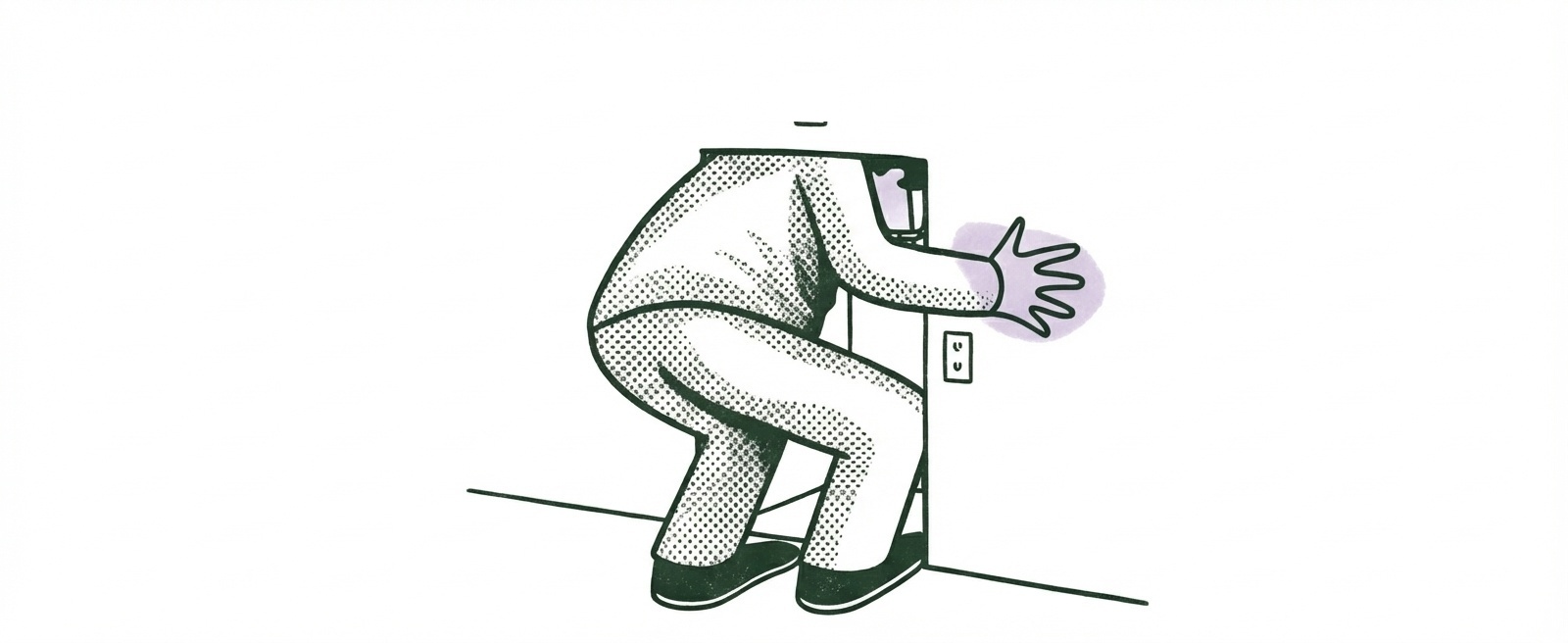
if you're going to be productive while the walls are shaking, you need more than just water and a flashlight. You need a Survival Kit that actually matters: noise-canceling headphones, a physical notebook for when the Wi-Fi dies, and enough premium chocolate to categorize 'stress-eating' as 'resource optimization.'
Living through this stripped away the fluff and forced me to become a faster, leaner designer. Here are 5 lessons from the concrete room that turned chaos into my greatest productivity hack.
1. Constraints Are a Design Superpower
Before the war, I had all the time in the world to iterate. I'd tweak the same screen for a week because the spacing 'felt off.' War fixed that fast. When you genuinely don't know if tomorrow's standup is happening, you stop polishing and start shipping. I started time-boxing everything - not because a productivity guru told me to, but because I literally had no choice.
2. Ruthless Prioritization is a Survival Skill
Nobody needs a prioritization matrix to figure out what matters when the stakes are real. I started looking at my backlog the same way I look at what to grab if I have 90 seconds to leave the house: what actually needs to come with me, and what can stay?
3. 'Good Enough to Ship' is Strategy, Not Laziness
I used to spend hours on micro-interactions that approximately four users would notice. War cured that. A product that's in people's hands today beats a 'perfect' product sitting in your drafts.
4. Your Best Ideas Come When You're Not Staring at the Screen
The shelter has no Wi-Fi, no Slack, and no 'quick question' messages. Just you, your thoughts, and a notebook. Some of my best design solutions came sitting on a concrete floor - not because I was trying to solve anything, but because I finally stopped forcing it.
5. Design for a Stressed, Distracted Human
Designing while genuinely stressed changed how I evaluate my own work forever. Unclear microcopy? Infuriating. A modal with three possible next steps? Paralyzing. A button that doesn't look tappable? I will not tap it and I will not forgive you.